A fall on a broken staircase, a slip on an unmarked wet floor, an assault in a poorly lit parking garage—these injuries share a common thread. Property owners have a legal responsibility to keep their premises reasonably safe for visitors, and when they fail, Pennsylvania law provides a path to compensation.
But recovering damages requires more than showing you were injured. Your claim must also show that the property owner's negligence caused your injury. Your claim must also show that the property owner's negligence caused your injury. Proving negligence in a premises liability claim requires securing specific evidence, effective negotiating skills, and a strong legal strategy.
An experienced Philadelphia premises liability lawyer can hold negligent property owners accountable and position injured victims for the best possible outcome.
Schedule A Free Case Consultation
Key Facts About Philadelphia Premises Liability Cases
- Your legal status on the property—whether you were a customer, social guest, or trespasser—determines the level of protection Pennsylvania law provides.
- A successful premises liability claim requires proving four elements: duty, breach, causation, and damages.
- Evidence such as surveillance footage, maintenance logs, and prior incident reports helps demonstrate that the property owner knew or should have known about the hazard.
- A property owner who knows about a dangerous condition but fails to fix it or warn visitors may be held liable for resulting injuries.
- A premises liability attorney investigates the facts, gathers evidence, and presents your case in the strongest possible light to insurance adjusters and juries.
Premises Liability in Pennsylvania: The Basics
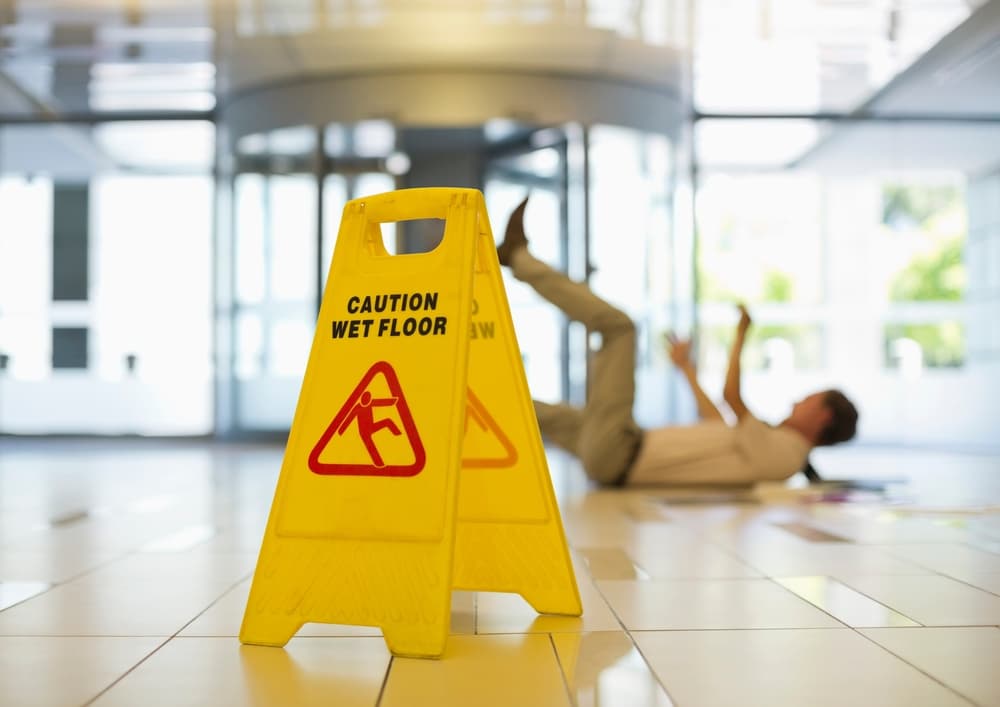
Premises liability refers to a property owner's legal responsibility to maintain reasonably safe conditions for people who enter their property. This area of law covers a wide range of incidents, from slip and fall accidents in grocery stores and restaurants to injuries caused by inadequate security at apartment complexes and parking garages.
Property owners in Philadelphia and throughout Pennsylvania have an obligation to inspect their premises, identify hazards, and either fix dangerous conditions or warn visitors about them. When they fail to take these reasonable steps, and someone is harmed as a result, the injured person may pursue a premises liability claim.
Common premises liability cases include the following types of incidents.
- Slip and fall accidents caused by wet floors, icy sidewalks, or uneven surfaces
- Trip and fall accidents caused by torn carpeting, broken stairs, or debris in walkways
- Falling objects from improperly secured shelves or construction sites
- Inadequate security leading to assaults, robberies, or other crimes
- Swimming pool accidents due to missing fencing or a lack of supervision
- Elevator and escalator malfunctions caused by deferred maintenance
Falls alone send over eight million Americans to emergency rooms each year, according to the National Safety Council. In Pennsylvania, falls rank as the third leading cause of preventable death. Many of these injuries occur in stores, office buildings, apartment complexes, and other properties where owners failed to address known hazards.
The Four Elements of a Premises Liability Negligence Claim
To recover compensation, your attorney must establish four legal elements. Each element builds on the previous one, and weaknesses in any area give defense attorneys and insurance companies room to dispute your claim.
Duty of care
The first element asks whether the property owner owed you a legal obligation to keep the premises safe. In Pennsylvania, the answer depends on your status at the time of the injury.
Pennsylvania law recognizes three categories of visitors, each entitled to different levels of protection.
- Invitees enter the property for business purposes: customers at a Reading Terminal Market vendor, patients at Jefferson Hospital, or tenants at an apartment building near Rittenhouse Square. Property owners owe invitees the highest duty of care, including an obligation to regularly inspect the premises and promptly correct hazards.
- Licensees have permission to be on the property but visit for their own purposes—a friend visiting your home or a delivery driver entering a private residence. Property owners must warn licensees of known hidden dangers.
- Trespassers enter without permission. Property owners generally owe trespassers minimal duties, though special rules apply to children attracted to hazards such as unfenced swimming pools.
If you were shopping at a store in Center City, dining at a restaurant in Fishtown, or visiting an office building along Market Street, you likely qualify as an invitee entitled to the highest level of protection.
Breach of duty
The second element examines whether the property owner failed to meet their legal obligation. This is the heart of most premises liability disputes.
A breach occurs when the property owner knew or should have known about a dangerous condition and failed to take reasonable steps to address it. Evidence of breach may include the following.
- Maintenance logs showing the hazard existed for an extended period
- Prior complaints from other visitors about the same condition
- Incident reports documenting earlier injuries at the same location
- Surveillance footage showing staff walking past the hazard without addressing it
- Building code violations identified by city inspectors
Property owners are not guarantors of absolute safety. The standard is reasonableness—did they take steps a prudent owner would take under similar circumstances? A grocery store that mops up a spill within minutes of discovering it may not be liable, but one that ignores a puddle in the produce aisle for an hour likely breached its duty.
Causation
The third element connects the property owner's negligence to your injury. Your case must show that the dangerous condition was a direct cause of your harm.
Causation has two parts. First, "but for" causation asks whether you would have been injured if not for the property owner's negligence. Second, proximate causation asks whether your injury was a foreseeable consequence of the hazard.
If you slipped on a wet floor at a hotel near Philadelphia International Airport and fractured your hip, causation seems straightforward. But if the property owner argues you were looking at your phone instead of watching where you walked, they may try to shift the blame onto you. Strong evidence, including witness statements, your medical records, and photos of the hazard, helps establish the link between the dangerous condition and your injury.
Damages

The final element requires proving that you suffered actual losses. Premises liability claims compensate victims for both economic and non-economic damages.
Economic damages cover measurable financial losses, while non-economic damages address the less tangible ways an injury affects your life. Depending on your situation, compensation may include the following.
- Medical bills, including emergency care, surgery, and hospitalization
- Physical therapy and rehabilitation costs
- Lost wages from missed work during recovery
- Future income loss if your injury prevents you from returning to your previous job
- Pain and suffering
- Emotional distress
- Loss of enjoyment of life
Documenting your damages begins immediately after the injury. Keep records of all medical treatment, including emergency care at facilities such as Penn Medicine or Temple University Hospital. Track time missed from work and any ongoing limitations that affect your daily activities.
How a Property Owner's Knowledge Affects Your Claim
One of the biggest hurdles in a premises liability case is proving the property owner was aware of the danger. Pennsylvania law provides two paths to establish this: actual notice, where the owner directly knew about the hazard, and constructive notice, where the hazard existed long enough that they should have discovered it.
Constructive notice can be more challenging to prove, but an experienced attorney will know where to look. Surveillance footage may show how long a spill sat on the floor before your fall. Prior incident reports or complaints may reveal a pattern of similar injuries at the same location. Maintenance records may show the property owner knew about a broken handrail for weeks before your fall.
What Is the Statute of Limitations for a Premises Liability Claim?
Pennsylvania law (42 Pa.C.S. § 5524) gives injured victims two years from the date of the accident to file a lawsuit. Missing this deadline almost always results in your case being dismissed, regardless of how strong the evidence is.
Special rules apply in certain situations. If the property is owned by a government entity, such as a Philadelphia city building or a SEPTA station, you must file a notice of intent to sue within six months of the injury. For minors, the two-year clock does not begin until the child turns 18.
Acting quickly protects more than your legal rights. Evidence disappears. Surveillance footage gets recorded over. Witnesses forget details. An attorney who begins investigating promptly has a better chance of preserving the evidence needed to prove your case.
Can Comparative Fault Reduce My Compensation?
Pennsylvania follows a modified comparative negligence rule. If you share some responsibility for your injury, your compensation is reduced by your percentage of fault. However, if you are 51% or more at fault, you recover nothing.
Insurance companies routinely argue that injured victims caused their own injuries. They may claim you were distracted, wearing inappropriate footwear, or ignored warning signs. These arguments aim to shift blame and reduce what they pay.
An attorney anticipates these defenses and builds a record that focuses attention on the property owner's negligence. Even if some fault is attributed to you, recovering a reduced award is far better than accepting a lowball settlement or giving up your claim entirely.
Simple Steps to Take to Protect Your Premises Liability Claim
If you've been injured on someone else's property, your first priority was getting medical care, and that was the right call. But once you've seen a doctor and begun treatment, there are additional steps that protect your legal rights and strengthen your claim.
Hire a premises liability lawyer immediately
This is the single most important step you can take. A premises liability attorney begins investigating while the evidence is still fresh, before surveillance footage is recorded over, before maintenance logs are lost or destroyed, and before witnesses forget essential details. Your lawyer also handles all communication with the property owner's insurance company, which protects you from saying something that could be twisted to undermine your claim. Early legal involvement often uncovers evidence you wouldn't know to look for on your own.
Keep all medical appointments and follow your treatment plan
Insurance adjusters scrutinize gaps in treatment. If you skip appointments or stop therapy early, they argue your injuries must not be serious, or that something other than the accident caused your pain. Following your doctor's recommendations does more than help you heal; it creates a documented medical record that links your injuries directly to the accident and shows the full extent of your condition.
Document your recovery in a journal
Your medical records capture diagnoses and treatment, but they don't tell the whole story. A written or video journal allows you to record daily pain levels, sleep disruptions, activities you can no longer enjoy, and the emotional toll of your injury. These details matter when calculating non-economic damages like pain and suffering. Months later, you won't remember exactly how you felt during week three of recovery, but your journal will.
Preserve evidence from the scene
If you haven't already, gather everything related to the accident that you can. Photographs of the hazard, the surrounding area, your injuries, and any footwear or clothing you were wearing at the time all help establish what happened. If witnesses saw your fall, collect their names and contact information before memories fade.
Avoid social media
Insurance adjusters and defense attorneys routinely monitor claimants' social media accounts. A photo of you at a family gathering or a post about running errands can be taken out of context to suggest your injuries aren't as serious as you claim.
The safest approach is to stay off social media entirely until your case resolves, or at a minimum, post nothing about your health, activities, or the accident and avoid being tagged in other users’ posts, photos, and videos.
Do not give recorded statements without your attorney
Insurance adjusters often reach out quickly, sounding friendly and sympathetic. They may ask for a recorded statement about how the accident happened. Politely decline until you've spoken with your lawyer. These statements are designed to lock you into a version of events that the insurer can later use to minimize or deny your claim.
FAQs About Proving Negligence in Philadelphia Premises Liability Cases
How long do premises liability cases take to resolve?
The timeline varies depending on the severity of your injuries, the strength of the evidence, and whether the case settles or goes to trial. Straightforward cases with clear liability typically resolve more quickly than complex cases involving disputed facts or catastrophic injuries. Your attorney can give you a clearer idea of what to expect based on the details of your case.
What if I was partially at fault for my injury?
Pennsylvania's comparative negligence rule allows you to recover damages if your fault is 50% or less. Your compensation is reduced proportionally. An attorney presents evidence that minimizes your share of fault and maximizes your recovery.
Can I sue if I was injured at a friend's house?
Yes. Social guests qualify as licensees, and property owners have a duty to warn licensees of hidden dangers they know about. If your friend knew about a hazard, such as a rotting deck board, and failed to warn you, you may have a claim against their homeowner's insurance. Your premises liability lawyer should know how to handle highly sensitive claims that require you to file a claim against a friend’s or family member’s insurance policy.
Do I need an attorney for a premises liability claim?
Insurance companies have legal teams dedicated to minimizing payouts. An attorney levels the playing field by investigating the accident, gathering evidence, negotiating with insurers, and, if necessary, taking your case to trial.
Take Control of Your Premises Liability Case

You can’t change what happened, but you can choose what happens next. A premises liability attorney with the Oakes Firm puts you in charge of your future, not the insurance company. We handle every part of your case while keeping you informed of its progress.
From investigating the accident and gathering evidence to negotiating with insurers and preparing for trial if necessary, we work to position your case for the strongest possible resolution. You stay in control of the major decisions while your legal team handles the rest. If you were injured on someone else's property in Philadelphia, call The Oakes Firm or contact us online for a free consultation.