After an Uber or Lyft crash, the other driver's account may not match what actually happened. Witnesses remember things differently. Police reports capture only part of the picture. But digital evidence doesn't forget, exaggerate, or change its account over time.
GPS data in rideshare accidents has become one of the most powerful tools for establishing what really occurred in the moments before a collision. Speed, location, route, sudden stops—it's all recorded. A Philadelphia rideshare accident lawyer who knows how to obtain and interpret this data can use it to hold the right parties accountable.
Schedule A Free Case Consultation
Key Facts About Digital Evidence in Uber and Lyft Accidents
- Uber and Lyft apps continuously track driver location, speed, and trip status, creating a second-by-second record of every ride.
- GPS coordinates can prove whether a driver was speeding, made an abrupt turn, or ran a red light, even when witnesses disagree.
- Event Data Recorders (EDRs) in vehicles capture braking, acceleration, and steering inputs in the seconds before impact.
- Smartphone data can show whether a driver was texting, using apps, or otherwise distracted at the moment of the crash.
- This digital trail often carries more weight in court than conflicting eyewitness accounts.
What Data Do Uber and Lyft Collect During Trips?
Rideshare companies collect enormous amounts of data on every ride. This information exists primarily for business purposes, but it becomes valuable evidence when accidents happen.
What Uber and Lyft apps record
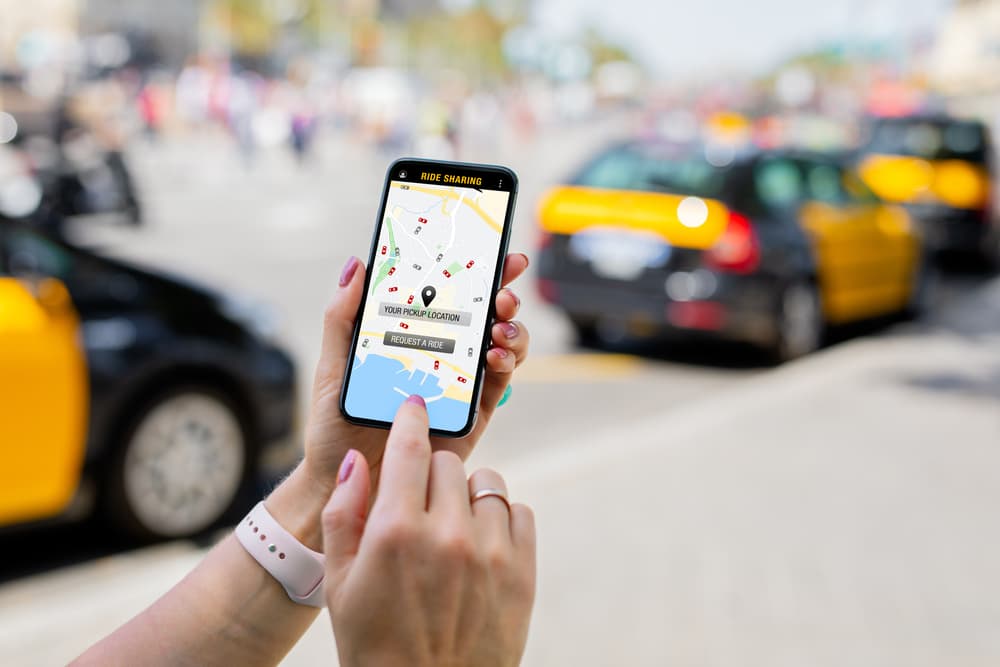
Every time a driver logs into Uber or Lyft, the app begins tracking:
- Real-time GPS location updated every few seconds
- Vehicle speed throughout the trip
- Route taken from pickup to destination
- Timestamps showing when the driver accepted the ride, arrived at pickup, started the trip, and completed it
- Whether the driver was actively transporting a passenger or waiting for a request
This data lives on company servers. After an accident, an attorney can request these records through formal legal channels before the information is overwritten or deleted.
Trip status determines available insurance coverage
The driver's app status at the exact moment of a crash determines which insurance policy applies in rideshare accidents. GPS and app data can confirm whether the driver was:
- Offline: the driver's personal auto insurance only, which may be as low as Pennsylvania's minimum limits of $15,000 per person/$30,000 per accident for bodily injury and $5,000 for property damage
- Online and waiting for a request: limited rideshare coverage of $50,000 per person/$100,000 per accident for bodily injury and $25,000 for property damage
- En route to pick up a passenger: full $1 million liability coverage
- Actively transporting a passenger: full $1 million liability coverage
Without this data, insurance companies may dispute coverage. With it, there's no room for argument. This becomes especially important when accidents involve uninsured or underinsured third-party drivers. In these cases, the rideshare company's UM/UIM coverage only applies during active trip periods, making precise app status data essential to accessing that protection.
However, coverage eligibility may still depend on specific policy terms, exclusions, and interpretations, so legal guidance is critical to ensure this protection applies.
Using GPS Data to Prove Fault in a Rideshare Accident
When fault for a rideshare accident is disputed, GPS data often provides the clearest answers. Here's what it can establish:
Speeding
GPS tracks vehicle speed continuously. If a driver claims they were going 35 mph but the data shows 55 mph, that discrepancy becomes central to your case.
Speeding on roads like Roosevelt Boulevard, I-76, or through congested areas of Center City significantly increases crash severity.
Erratic driving patterns
Sudden lane changes, abrupt acceleration, and hard braking all show up in the data. These patterns may indicate aggressive driving, impairment, or distraction.
An attorney working with accident reconstruction specialists can map these movements against the crash timeline.
Running red lights or stop signs
GPS coordinates pinpoint exactly where a vehicle was at any given second. Cross-referencing this with traffic signal timing can prove whether a driver entered an intersection legally or blew through a red light at Broad and Market or any other Philadelphia intersection.
Route deviations
If a driver took an unusual route or made unexpected turns, possibly while distracted by the app, GPS records capture it. This evidence can support claims that the driver wasn't paying attention to road conditions.
What Is an Event Data Recorder and How Does It Help Your Case?
Most modern vehicles contain an Event Data Recorder (EDR), similar to an airplane's black box. The National Highway Traffic Safety Administration (NHTSA) estimates that over 99% of new vehicles sold in the United States have these devices installed. They capture critical information in the seconds before and during a crash.
What EDRs record

- Vehicle speed at impact and in the seconds before
- Brake application and timing
- Throttle position
- Steering angle
- Seatbelt status
- Airbag deployment timing
This data provides an objective record of driver actions that no witness testimony can match.
Accessing EDR data
EDR information requires specialized equipment to download. An attorney can work with forensic specialists to extract this data before the vehicle is repaired, sold, or scrapped. Acting quickly is essential. Once the car is out of your control, the evidence may be lost.
Pennsylvania courts have consistently admitted EDR data as evidence in car accident cases. The Pennsylvania Supreme Court addressed related issues in Pennsylvania v. Wallace, affirming that GPS and electronic monitoring data do not constitute hearsay under Rule 801 of the Pennsylvania Rules of Evidence, as the defendant had argued.
Using Phone Records to Prove Distracted Driving
Rideshare drivers spend their shifts interacting with smartphones. Accepting rides, following GPS directions, communicating with passengers—all of it happens on screen. When that interaction crosses into distraction, crashes often follow.
What phone records reveal
- Call logs showing active calls at the time of impact
- Text message timestamps
- App usage data showing which applications were open
- Screen-on time indicating when the driver was looking at their phone
If a driver was reading a text while approaching the intersection of Girard Avenue and Front Street, phone records may be able to prove it. This evidence transforms a "your word against theirs" dispute into a clear-cut case of negligence.
Why Do Rideshare Accidents Happen in Philadelphia?
GPS and digital evidence frequently confirm the same dangerous behaviors that lead to rideshare accidents throughout Philadelphia:
- Distracted driving: Constant phone interaction to accept rides, check navigation, and communicate with passengers pulls attention from the road, especially in heavy traffic near the stadiums in South Philadelphia or along Market Street.
- Speeding to meet pickup times: Drivers rushing to reach passengers before they cancel often exceed safe speeds around University City, Old City, and Rittenhouse Square.
- Fatigue from long shifts: Many drivers work 10 or more hours straight. Late-night pickups from bars in Northern Liberties and Fishtown frequently involve exhausted drivers whose reaction times have slowed.
- Unfamiliarity with local streets: GPS can't account for trolley tracks on Girard Avenue, sudden lane shifts on I-676, or the tight turns in historic neighborhoods. Out-of-town drivers often make last-second maneuvers that cause collisions.
- Following GPS blindly: Some drivers trust their navigation apps more than their own eyes, leading to dangerous decisions when the app gives poor directions or fails to account for construction zones.
When any of these factors cause a crash, digital evidence can document exactly what happened and who bears responsibility.
Serious Injuries From Uber and Lyft Collisions
The same data that proves fault also helps document the severity of a crash. Higher speeds recorded by GPS correlate with more serious injuries, strengthening claims for compensation. According to the Pennsylvania Department of Transportation, speed is a contributing factor in a significant percentage of serious injury crashes statewide.
Philadelphia trauma centers such as Penn Presbyterian Medical Center, Temple University Hospital, and Jefferson Hospital regularly treat rideshare accident victims with:
- Whiplash and soft tissue injuries: Rear-end collisions, common when drivers brake suddenly after looking at their phones, frequently cause neck and back strain.
- Traumatic brain injuries: High-speed impacts can cause concussions or more severe brain trauma, sometimes with symptoms that don't appear for days or weeks.
- Spinal cord damage: Herniated discs, fractured vertebrae, and in severe cases, partial or complete paralysis.
- Broken bones: Arms, legs, ribs, and facial fractures commonly result from side-impact and head-on collisions.
- Internal injuries: Damage to organs may not be immediately obvious but can be life-threatening without prompt treatment.
Connecting GPS-documented speed and impact data with medical records creates a powerful case for full compensation.
How Do Lawyers Preserve GPS and App Data After a Rideshare Crash?
GPS data and EDR information don't stay available forever. Rideshare companies may overwrite records after a set period. Vehicles get repaired or totaled out. Phones are wiped or replaced. Moving quickly makes the difference between a strong case and a weak one.
Sending preservation letters
An attorney can send formal preservation letters to Uber, Lyft, and any other parties within days of a crash. These letters create a legal obligation to retain all relevant data, including trip records, GPS logs, and driver communications.
Requesting data through discovery
Once a claim or lawsuit is filed, attorneys use the discovery process to compel production of digital evidence. This includes subpoenas for app data, vehicle telematics, and phone records that the companies might not voluntarily hand over.
Working with forensic specialists
Raw GPS coordinates and EDR downloads require interpretation. Attorneys partner with accident reconstruction experts and digital forensics specialists who can translate the data into clear, compelling evidence for insurance adjusters or juries.
Without legal help, injured passengers rarely have the resources or knowledge to secure this evidence before it is lost or destroyed. An experienced attorney handles preservation, collection, and analysis while you focus on recovering from your injuries.
Digital Evidence Can Make or Break Your Rideshare Accident Claim
Insurance companies look for reasons to deny or reduce claims. When it's your word against the driver's, adjusters often side with their insured. Digital evidence changes that equation.
GPS data and EDR records provide:
- Objective facts: Numbers don't lie. Speed readings, timestamps, and coordinates speak for themselves.
- Credibility: When your account matches the digital record, your entire case becomes more believable.
- Leverage in negotiations: Insurers settle faster and for higher amounts when the evidence clearly supports liability.
- Stronger pain and suffering claims: Documented speed and impact data can help justify compensation for non-economic damages.
- Courtroom impact: If your case goes to trial, juries find electronic evidence persuasive because it removes the guesswork from determining fault.
A driver can claim they weren't speeding. A witness can misremember which car had the green light. But GPS data recorded at the moment of impact tells the truth.
Frequently Asked Questions About Rideshare Accident Evidence
Can I get Uber or Lyft's GPS data after an accident?
Yes, but you typically need an attorney to obtain it. Rideshare companies don't voluntarily release trip data to passengers. A lawyer can send preservation letters immediately and use legal discovery to compel production of records.
How long do rideshare companies keep trip data?
Retention policies vary and aren't publicly disclosed. Some data may be overwritten within weeks or months. Acting quickly after an accident is essential to ensure records are preserved before they're deleted.
What if the rideshare driver claims the GPS data is wrong?
GPS technology is highly accurate, and courts generally view it as reliable. If a driver disputes the data, forensic experts can validate its accuracy. Challenging GPS evidence rarely succeeds when the data has been properly preserved and authenticated.
Can phone records prove the driver was texting?
Yes. Phone records with timestamps can show whether a driver was sending or receiving texts, making calls, or using apps at the time of the crash. This evidence is often decisive in distracted driving cases.
How long do I have to file a rideshare accident claim in Pennsylvania?
Pennsylvania's statute of limitations for personal injury claims is two years from the date of the accident. However, digital evidence can disappear much faster. Filing a rideshare accident claim promptly gives your attorney time to preserve GPS data, EDR records, and other digital evidence before it's lost.
Talk to a Philadelphia Rideshare Accident Lawyer
Digital evidence can make or break a rideshare accident case, but only if it's preserved and presented correctly. GPS data, app records, and EDR information won't help you if they disappear before anyone requests them.

The Oakes Firm knows how to secure this evidence quickly and use it to build the strongest possible case. We work with forensic specialists and accident reconstruction experts to turn raw data into clear proof of fault.
We handle rideshare injury claims throughout Pennsylvania on a contingency basis, so you pay nothing unless we recover compensation for you.
If you were injured in an Uber or Lyft accident in Philadelphia, call us or contact us online today for a free consultation.