You may be wondering what would happen if there were a multi-vehicle pileup in Pennsylvania after you were injured or lost a loved one in a chain-reaction crash. It requires thorough research and knowledgeable legal assistance to hold each accountable party.
A Pennsylvania car accident attorney can help you sort through liability, deal with multiple insurers, and pursue compensation for your losses through a free consultation.
Schedule A Free Case Consultation
Key Takeaways: Multi-Vehicle Accidents in PA
- Pennsylvania’s modified comparative negligence rule allows recovery even if you’re partially at fault, as long as you’re less than 51% responsible.
- In pileups, several parties may share liability, including drivers, trucking companies, and government agencies that maintain roads.
- State law requires a minimum of $15,000 per person and $30,000 per accident in liability coverage, but that’s rarely enough in serious crashes.
- You must file a personal injury lawsuit within two years of the accident date under Pennsylvania’s statute of limitations.
- Determining fault requires evidence such as police reports, witness statements, and sometimes accident reconstruction.
What Constitutes a Multi-Vehicle Pileup?
Three or more vehicles colliding sequentially is known as a multi-vehicle pileup, or chain-reaction crash. These incidents frequently happen on busy interstates and highways, where quick reflexes and high speeds make it simple for a minor error to turn into a major disaster.
Frequently Caused Multi-Vehicle Accidents
A number of things frequently lead to pileups:
- Bad weather: Especially in the vicinity of the Poconos, fog, black ice, and snow frequently impair visibility and traction.
- Speeding or tailgating: On the Pennsylvania Turnpike, drivers who follow too closely frequently result in rear-end collisions.
- Distracted driving: Using in-car systems or sending texts while driving diverts attention long enough for a catastrophe to occur.
- Sudden braking: In fast-moving traffic, it's common for a driver to stop suddenly, setting off a chain reaction.
- Truck crashes: When commercial trucks are involved, pileups can get much worse because they need more stopping distance.
Who Is at Fault in a Local PA Multi-Vehicle Accident?
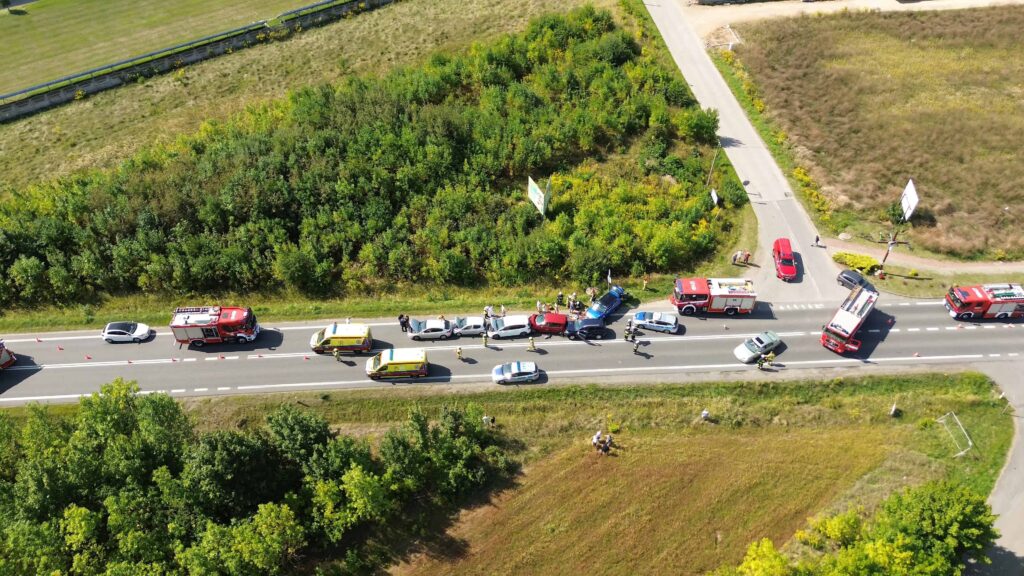
Determining who caused a pileup requires analyzing every vehicle’s movement and the chain of impacts. Law enforcement, insurers, and attorneys often review multiple perspectives to identify which driver, or combination of drivers, acted carelessly.
Pennsylvania’s Modified Comparative Negligence Standard
A modified comparative negligence rule is applied in Pennsylvania. This implies that even if your percentage of fault is less than 51%, you can still seek damages. Your percentage of responsibility is deducted from your recovery. For example, your entire recovery would be lowered by 20% if you were found to be 20% at fault.
How Courts Determine Fault Among Multiple Drivers
Investigators look at physical evidence, such as skid marks, impact points, and vehicle damage. They also consider:
- Eyewitness statements describing how the crash unfolded
- Video footage from dashcams or nearby surveillance cameras
- Data from vehicle event recorders showing speed and braking
Each driver’s actions immediately before impact matter most. If one driver followed too closely or drove too fast for conditions, that behavior can form the basis of liability.
Police Reports' Function in Determining Liability
Police officers occasionally file criminal charges against drivers in addition to collecting statements and recording their observations. Their reports offer an unbiased account of what happened. These studies are frequently used by attorneys to support their clients' claims and find new sources of evidence.
When Several People Share Accountability
Sometimes more than one driver is at fault. A truck driver may brake too late when a car in front of them abruptly changes lanes. If a government agency fails to clear ice roads, it may be held partially accountable. When multiple parties share blame, it complicates the recovery process and increases the likelihood of damages claims.
What Damages Can You Recover After a Multi-Vehicle Pileup?
Following a major crash, the financial consequences might continue for years. Medical costs, lost income, and long-term care expenses may pile up rapidly. Pennsylvania law permits you to seek compensation for both measured and immeasurable damages.
Economic Damages
Economic damages include:
- Medical expenses: Hospital care, surgery, rehabilitation, and follow-up treatment
- Lost wages: Income missed due to time away from work
- Loss of earning capacity: Reduced ability to work in the future
- Property damage: Vehicle repairs or replacement
Non-Economic Damages
Non-economic damages cover personal suffering that doesn’t come with receipts. They often include:
- Pain and discomfort from ongoing physical limitations
- Loss of enjoyment of life due to long-term injuries
- Emotional strain caused by trauma or lifestyle changes
Wrongful Death Claims in Fatal Pileup Accidents
When a loved one dies in an accident, a family may file a wrongful death lawsuit. These claims assist in paying for lost household income, funeral expenses, and the price of a friendship that has been lost. In Philadelphia and across the state, these cases frequently assist families in holding negligent drivers responsible for the harm they cause.
How Does Insurance Work in Multi-Vehicle Accidents?
Insurance plays a significant role in multi-car crashes, especially when several policies come into play. Understanding how coverage applies can help prevent disputes later.
The Minimum Insurance Requirements in Pennsylvania
According to state law, one person must be injured or killed for $15,000, two or more people must be injured or killed for $30,000, and property damage must be paid for $5,000.
Even though these sums satisfy legal requirements, they hardly ever cover all damages in pileups involving serious injuries.
Managing Several Insurance Companies
Each insurance company may attempt to place blame for an accident on a different driver. Adjusters frequently limit settlements or dispute responsibility. Attorneys monitor all correspondence with insurance companies, ensuring that statements and supporting documentation strengthen rather than diminish your story.
Understanding Underinsured Motorist Coverage
Underinsured motorist (UIM) coverage protects you when the at-fault driver does not have enough insurance. In Pennsylvania, UIM coverage is a valuable resource in major incidents. If your injuries exceed the available liability coverage, your UIM policy can assist fill the difference.
What Happens When Coverage Limits Are Exceeded
Affected parties may file a direct lawsuit against the careless drivers if damages exceed insurance limits. In some circumstances, commercial plans or umbrella coverage may be applicable. An attorney examines each potential source of recovery to ensure that all options are examined.
What Should You Do Immediately After a Multi-Vehicle Pileup?
Your actions in the minutes and days after a crash influence your safety and the strength of your future claim.
If feasible, move to a safe area and check for any injuries. Capture images of all cars, trash, and road conditions. Get contact information for witnesses. Even a few snap shots of license plates and placements might help later.
Reporting Requirements Under Pennsylvania Law
State law requires drivers to report incidents involving injury, death, or significant property damage to the police. When law enforcement arrives, obtain the incident number and officer's name for future reference.
Some injuries develop hours or days after an accident. Getting medical attention straight away not only saves your health, but it also ties your injuries directly to the collision. Keep copies of all records and receipts as proof of your losses.
Avoiding Common Mistakes That Harm Your Claim
Before speaking with an attorney, do not give recorded statements to insurance adjusters. Do not publish about the accident on social media, as insurers may use them against you. Also, don't accept early settlement offers until you know the entire worth of your claim.
How Long Do You Have to File a Claim in Pennsylvania?

You generally have two years from the accident date to file a personal injury lawsuit. Missing this deadline almost always ends your right to pursue damages.
Exceptions That May Extend Filing Deadlines
Certain exclusions apply. For example, if the wounded individual was under 18, the deadline starts when they attain maturity. Claims against government agencies may need official notice within a shorter time frame, often within months of the crash.
Why Earlier Action Strengthens Your Case
Acting immediately permits your attorney to preserve evidence before it is lost. Skid marks disappear, cars are fixed, and witnesses' memories fade. Prompt action increases the odds of establishing a good claim.
Can You Sue Multiple Parties After a Pileup?
Yes. In many pileups, more than one party contributes to the crash. Identifying all responsible individuals and entities helps you pursue the full value of your claim.
Identifying All Potentially Liable Parties
Potential defendants might include multiple drivers, employers of commercial drivers, or even companies responsible for vehicle maintenance. Each party’s insurer may cover a portion of the total damages.
Claims Against Commercial Vehicle Operators
When a semi-truck or delivery vehicle causes a chain reaction, both the driver and their employer may be held accountable. Trucking businesses are required by federal and state rules to keep their trucks safe and to monitor their drivers' hours. Violations of these regulations frequently establish accusations of carelessness.
Government Liability for Road Conditions
A government agency may be held partially liable if inadequate road design or maintenance caused the collision.For example, icy patches on Route 222 in Lancaster County or unmarked construction zones in Delaware County could form the basis of a claim against the entity responsible for maintenance.
Product Liability in Defective Vehicle Cases
Sometimes, a defective part, such as faulty brakes or airbags, contributes to a crash or worsens injuries. In that case, a product liability claim against the manufacturer or distributor may apply.
How The Oakes Firm Can Help
Handling a multi-vehicle pileup requires attention to detail, persistence, and strong advocacy. At The Oakes Firm, we represent Pennsylvania residents injured by careless drivers and corporations who prioritize profits over safety.
Conducting Thorough Accident Investigations
Our team works with accident reconstruction professionals to uncover how the pileup occurred. We gather police reports, witness statements, and digital evidence to piece together the chain of events. This helps establish liability among the parties involved.
Handling Complex Multi-Party Negotiations
When several insurance companies are involved, each tries to minimize its share of responsibility. We communicate with everyone to make sure accountability stays where it belongs. Our attorneys work to present clear evidence that supports your side of the story.
Maximizing Your Compensation Through All Available Channels
We identify every available source of recovery, including underinsured motorist coverage, commercial policies, or multiple defendants. Our goal is to document all losses so that no category of damage is overlooked.
Protecting Your Rights Against Insurance Company Tactics
Insurance companies often try to limit payouts through quick settlements or misleading statements. We protect your rights by reviewing all offers and making sure that insurance companies honor their obligations.
Taking Your Case to Trial When Necessary
If the insurance companies or at-fault drivers refuse to resolve your claim fairly, we prepare to take your case to court. Trial preparation often strengthens settlement discussions and ensures your story receives the attention it deserves.
Frequently Asked Questions About Multi-Car Accident Claims
What if the other drivers involved don’t have insurance?
Your uninsured motorist (UM) coverage can help cover your losses when another driver lacks insurance. If you don’t have UM coverage, your attorney may explore other responsible parties such as employers or government agencies.
Can weather conditions affect who is liable in a pileup?
Yes. Even during snow or fog, drivers must adjust speed and following distance. A driver who ignores weather conditions and causes a crash can still be held liable.
How is compensation divided when multiple drivers are at fault?
Each driver pays a percentage of the damages that matches their share of fault. For example, if a driver is found 40 percent responsible, their insurer pays 40 percent of the total damages.
What if I wasn’t injured immediately but developed symptoms later?
Delayed injuries are common after pileups. Seek medical attention as soon as symptoms appear, and inform your doctor about the accident so the link is clear in your records.
Will I have to go to court for a multi-vehicle accident case?
Most cases settle before trial, but some go to court if insurers refuse to accept responsibility. Your attorney can prepare your case for both possibilities.
Contact Our Multi-Car Accident Attorneys in Pennsylvania Now
Multi-vehicle accidents in Pennsylvania often involve complicated facts, multiple defendants, and competing insurance companies. Acting quickly protects your rights and preserves evidence.
The Oakes Firm helps individuals and families pursue justice after serious crashes through focused investigation and determined advocacy. Reach out today for a free, no-obligation case evaluation today.