Motorcyclists in Pennsylvania often deal with congested roads, slow-moving traffic, and drivers who may not always pay close attention. If you suffered injuries in a motorcycle accident, you may wonder how the state’s lane splitting laws affect your situation. Knowing what motorcyclists need to know about lane splitting laws in Pennsylvania can help you protect your rights after a crash.
Lane splitting laws directly affect how responsibility for an accident is determined and what options you have for pursuing a claim. With the guidance of a motorcycle accident lawyer, you can get the support you need to build your case. If you’re recovering from a collision, you can contact a Pennsylvania motorcycle accident attorney near you for a free consultation.
Schedule A Free Case Consultation
Key Takeaways: Lane Splitting Law in PA
- Lane splitting is illegal in Pennsylvania under current traffic laws, and motorcyclists who engage in this practice can face traffic citations and fines
- Motorcyclists involved in accidents while lane splitting may be found partially or fully at fault, which can significantly reduce or eliminate their ability to recover compensation
- Pennsylvania follows a modified comparative negligence rule, meaning you can only recover damages if you are less than 51% at fault for the accident
- Understanding proper lane usage and following Pennsylvania's motorcycle safety laws can protect your legal rights and improve your safety on the road
- If you're injured in a motorcycle accident, documentation and legal representation are crucial for protecting your right to compensation
What Is Lane Splitting?
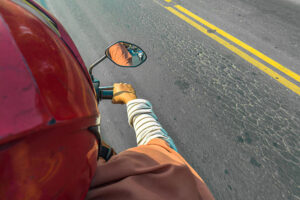
Lane splitting happens when a motorcyclist rides between two lanes of traffic moving in the same direction. Riders usually attempt it during traffic jams to bypass cars. While this might seem like a convenient way to save time, Pennsylvania law doesn’t allow it, and doing so can affect both safety and legal outcomes. Riders often confuse lane splitting with other practices, so knowing the difference matters.
How Lane Splitting Differs from Lane Sharing
Lane sharing means two motorcycles ride side by side within the same lane. This is legal in Pennsylvania if no more than two motorcycles share a lane. Lane splitting, on the other hand, involves moving between cars and trucks, which is not legal in the state. Think of it this way: lane sharing involves cooperation between two motorcyclists, while lane splitting forces car drivers to deal with a rider suddenly appearing between their vehicles.
Common Scenarios Where Lane Splitting Occurs
- Traffic jams: Riders may weave between stopped or slow-moving cars, hoping to move faster than the flow of traffic.
- Highway congestion: Some attempt to ride between cars on multi-lane highways when vehicles slow down in rush hour.
- Red lights: Motorcyclists may try to move to the front of a line of vehicles waiting for a light.
Each of these scenarios involves risk. Drivers often change lanes or inch forward without warning, and lane-splitting riders have little room to maneuver if something unexpected happens. The practice doesn’t give the rider the same protection as staying in a lane, and the margin for error is extremely small.
Is Lane Splitting Legal in Pennsylvania?
Motorcyclists often ask if lane splitting is allowed in Pennsylvania. The short answer is no.
Pennsylvania's Current Lane Splitting Law
Pennsylvania traffic code does not allow lane splitting. The law requires motorcyclists to use a full lane just as other motor vehicles do. Attempting to split lanes violates this rule.
Penalties for Lane Splitting in Pennsylvania
If a police officer observes a motorcyclist lane splitting, the rider may receive a traffic citation. Fines vary, but violations often result in points on your driving record, higher insurance rates, and potential liability if an accident occurs.
Single Lane Occupancy Requirements
Pennsylvania law 75 Pa.C.S. § 3523 states that every motorcycle is entitled to the full use of a lane. Other vehicles cannot deprive a motorcyclist of that space, but the rider also cannot ride between lanes.
Proper Passing Procedures for Motorcyclists
Motorcyclists must follow the same passing rules as cars. They must change lanes fully before passing rather than attempting to pass between vehicles.
Why Is Lane Splitting Illegal in Pennsylvania?
The state considers safety and roadway conditions when shaping its motorcycle laws. Lawmakers and traffic officials looked at research, accident reports, and roadway design before deciding to keep the practice unlawful.
Safety Concerns for Motorcyclists
Lane splitting places motorcyclists dangerously close to larger vehicles. A sudden lane change or door opening could cause a crash. Motorcycles don’t have the structural protection of a car, so even minor contact can throw a rider from the bike. Some studies from states that allow lane filtering suggest it can reduce rear-end accidents, but Pennsylvania traffic conditions differ, and the risk of side-swiping crashes is higher.
Risk to Other Drivers
Drivers in cars and trucks don’t always expect a motorcycle to appear between lanes. Sudden surprises increase the risk of collisions. Imagine a driver glancing in the mirror and seeing clear space, only to move slightly over and strike a motorcyclist who slipped between vehicles. The driver may never have had a chance to anticipate the maneuver.
Limited Space in Pennsylvania Traffic Lanes
Most lanes in Pennsylvania don’t provide enough space for safe lane splitting. Unlike states with wide highways, Pennsylvania’s road design makes the practice especially dangerous. Many highways in the state were built decades ago, and the lanes don’t leave room for a rider to safely pass between cars. Rough road surfaces, construction zones, and narrow shoulders add to the danger. In short, Pennsylvania roads were never designed with lane splitting in mind.
Can You Be Held Liable for an Accident While Lane Splitting?
Liability plays a major role in accident claims, especially when lane splitting is involved.
How Lane Splitting Affects Fault Determination
If a motorcyclist splits lanes and an accident occurs, police and insurance companies often assign fault to the rider. Even if another driver acted carelessly, the rider’s unlawful maneuver could weigh heavily against them.
Pennsylvania's Comparative Negligence Law
Pennsylvania uses a modified comparative negligence system. You may recover damages only if your share of fault is less than 51 percent. If you’re found 51 percent or more at fault, you cannot recover anything.
Impact on Your Personal Injury Claim
Even partial fault reduces your compensation. For example, if you’re found 30 percent at fault, your recovery amount decreases by that percentage.
What Should You Do If You're Injured While Lane Splitting?
Motorcyclists sometimes make mistakes. If you’re hurt while lane splitting, you still have options.
Immediate Steps After a Motorcycle Accident
Move to a safe place if possible. Check yourself and others for injuries, and call emergency services.
Documenting the Accident Scene
Take photos of your motorcycle, the other vehicles, traffic signals, and road conditions. Collect witness statements and contact details.
When to Contact Law Enforcement
Always report the accident to the police. Their report will document what happened, which may help with your claim.
Seeking Medical Attention
Get medical care right away, even if you feel fine. Some injuries don’t show symptoms immediately.
How Insurance Companies Handle Lane Splitting Accidents
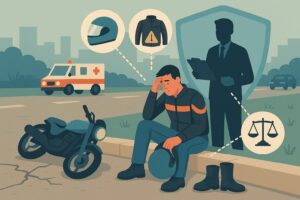
Insurance companies often resist paying claims involving illegal lane usage.
Insurance Adjusters and Fault Assessment
Adjusters will look for reasons to assign fault to the rider. They may argue that lane splitting caused or contributed to the crash.
Common Arguments Insurance Companies Make
- The motorcyclist created a dangerous situation by lane splitting.
- The rider should have stayed in the lane like other vehicles.
- The crash wouldn’t have happened without lane splitting.
How Illegal Lane Splitting Affects Settlement Negotiations
Insurance companies often use the illegality of lane splitting to reduce settlement offers. They may refuse to pay for certain damages or argue that the rider’s actions prevent recovery.
What Are the Alternatives to Lane Splitting in Pennsylvania?
Even though lane splitting is illegal, riders can adopt safe practices to deal with heavy traffic.
Safe Riding Practices in Heavy Traffic
Stay patient, keep a safe distance from cars, and use your full lane space.
Positioning Your Motorcycle for Visibility
Ride where other drivers can see you. Avoid blind spots, and use your headlight even during the day.
Defensive Driving Techniques for Motorcyclists
Anticipate other drivers’ moves. Slow down near intersections, watch for sudden lane changes, and prepare for unexpected hazards.
Pennsylvania Motorcycle Safety Laws You Should Know
Staying informed about motorcycle safety laws can protect both your health and your legal rights.
Helmet Requirements
All riders under 21 must wear a helmet. Riders over 21 may ride without one if they have at least two years of experience or have completed a safety course. Even though the law allows some riders to go without helmets, safety experts recommend helmet use for everyone.
A helmet reduces the risk of head injuries, and juries sometimes look at whether a rider wore one when deciding cases. Choosing to wear a helmet not only protects your health but can also make a difference in how your case is viewed in court.
Equipment and Lighting Standards
Motorcycles must have working headlights, tail lights, turn signals, and mirrors. Tires and brakes must meet safety standards. These rules help ensure other drivers can see motorcyclists and that motorcycles can respond quickly to sudden changes on the road.
For example, a missing brake light may make it harder to prove that another driver should have noticed you slowing down. Meeting equipment standards keeps you safer and also reduces arguments that your own bike contributed to the crash.
Licensing and Training Requirements
Riders must hold a Class M license. To get one, you need to pass written and road tests unless you complete an approved safety course. Training courses are available and strongly encouraged for new riders. They teach hazard awareness, safe braking, and how to position yourself on the road for visibility.
Riders who take these courses not only build stronger skills but also have documentation of their commitment to safety, which may help if they ever need to show that they acted responsibly.
How Our Attorneys Can Help
Motorcycle accidents often involve more than just physical injuries. They can bring lost income, medical bills, and other financial hardships. Our attorneys at The Oakes Firm are ready to guide you through the process of seeking compensation.
Investigating Your Motorcycle Accident
We review police reports, talk to witnesses, and gather all available evidence about how the accident happened.
Gathering Evidence to Support Your Claim
We collect medical records, employment documents, and expert testimony to show the full impact of your injuries.
Negotiating with Insurance Companies
We handle communication with insurance adjusters who may try to undervalue your claim.
Protecting Your Rights Even When Partially at Fault
Even if you were lane splitting, we can examine whether other drivers contributed to the crash and build arguments to strengthen your position.
Maximizing Your Compensation
We work to pursue every available source of compensation, including medical costs, lost income, and the long-term effects of your injuries.
Frequently Asked Questions About Lane Splitting in PA
Can I lane split in stopped traffic in Pennsylvania?
No. Even if traffic is completely stopped, lane splitting is illegal under Pennsylvania law.
What if another driver hits me while I'm lane splitting?
You may still pursue a claim, but your share of fault could affect the outcome. A lawyer can review your situation and help build your case.
Will my insurance cover me if I was lane splitting when the accident happened?
Coverage often depends on your policy, but insurance companies may argue that you broke the law and try to deny or reduce your claim.
How long do I have to file a motorcycle accident claim in PA?
Pennsylvania allows injured people two years from the date of the accident to file a personal injury lawsuit in court. Missing that deadline will likely bar you from being able to receive compensation.
What if I'm from a state where lane splitting is legal and I get a ticket in Pennsylvania?
You must follow Pennsylvania traffic laws while riding in the state, regardless of your home state’s rules.
Contact Our Motorcycle Accident Attorneys in Philadelphia Now

Pennsylvania motorcycle accident claims involve strict time limits. Evidence can disappear quickly, and delays may weaken your case. The Oakes Firm can review your situation and explain your legal options. Contact our attorneys for a free consultation today.