Falls from scaffolding, roofing, and ladders are a leading cause of severe injury and death in the construction industry. The impact of such a fall can result in catastrophic injuries, including traumatic brain injuries, broken bones, and even wrongful death.
For the victims and their families, the consequences are a combination of physical pain, emotional trauma, and overwhelming financial stress. You may be wondering how you will pay for soaring medical bills, support your family while you are out of work, and face the long road to recovery.
At Oakes Firm, we understand the immense challenges you are facing. We are a team of compassionate legal advocates dedicated to fighting for the rights of injured construction workers and their families in Philadelphia.
While you may be told that your only option is workers' compensation, the truth is often more complex. In many cases, you may be able to file a separate personal injury lawsuit against a negligent third party to secure you full compensation.
We will explore the law of falls from heights on construction sites. Subsequently, we will break down your options, explain the role of a third-party claim, and detail how our firm can act as your relentless advocate to secure the justice and financial security you need.
Speak with a skilled construction accident lawyer today — contact Oakes Firm for your free consultation.
Schedule A Free Case Consultation
The Third-Party Lawsuit: A Path to Full Compensation
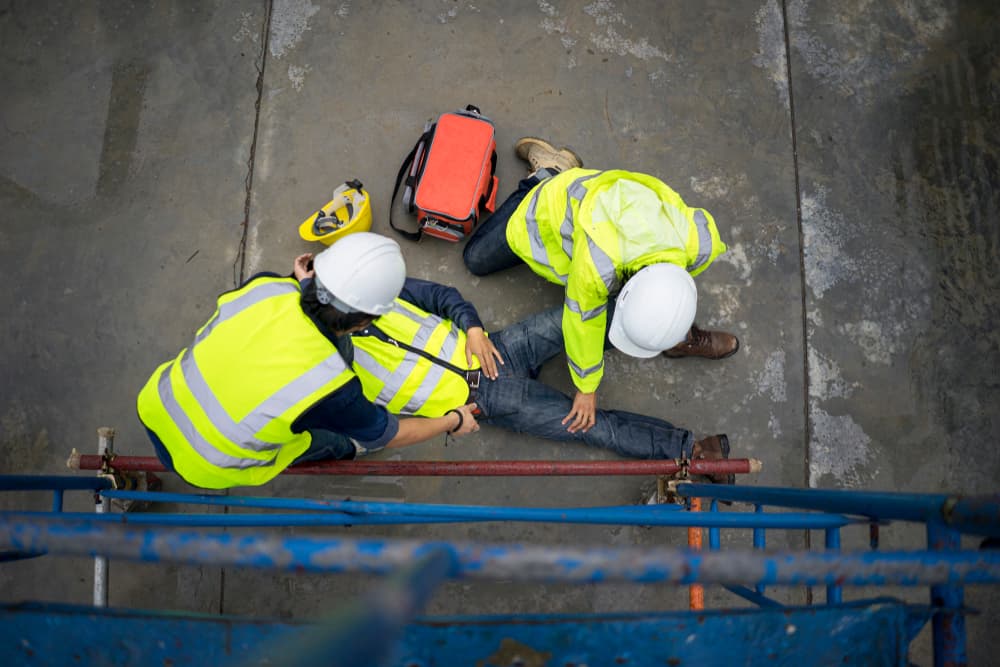
A third-party claim is a separate personal injury lawsuit filed against a person or company other than your employer. This is a powerful legal tool that allows you to seek a more comprehensive recovery, including all the damages that workers' compensation leaves out.
The key to a successful third-party claim is to prove that another party’s negligence directly caused your fall. In construction cases, a variety of parties on a job site can be held liable.
Who Can Be a Third Party?
- General Contractors: The general contractor on a job site is often responsible for overall site safety, even if they are not your direct employer. If a general contractor fails to enforce safety regulations, provides inadequate supervision, or creates an unsafe work environment, they can be held liable.
- Property Owners: If the property owner failed to maintain a safe environment or was aware of a dangerous condition that led to your fall, they may be held responsible under premises liability laws.
- Subcontractors: If your fall was caused by the negligence of a different subcontractor on the site—for example, if they improperly erected scaffolding or left debris in a work area—that company can be held liable.
- Equipment Manufacturers: If your fall was caused by a defective or malfunctioning piece of equipment, such as a faulty scaffold component, a broken ladder, or a failing safety harness, you can file a product liability claim against the manufacturer.
The Importance of the General Contractor's Role
Under Pennsylvania law, a general contractor has a legal duty to provide a reasonably safe work environment. This duty includes ensuring that safety equipment is in good working order, that fall protection systems are properly installed, and that all workers on the site are following safety protocols.
If a general contractor fails in this duty and it leads to your injury, they can be held liable. We will meticulously investigate the job site to determine if the general contractor, a subcontractor, or any other party failed to meet their legal duty of care.
The Elements of a Personal Injury Lawsuit
To successfully win a personal injury claim in Pennsylvania, you must be able to prove four key legal elements. A lawsuit is about proving that someone else's carelessness was the direct cause of your harm. The burden of proof rests on the plaintiff (the injured person) to demonstrate:
- Duty of Care: This means the defendant (the at-fault party) had a legal obligation to act with a certain level of care to prevent harm to others. On a construction site, this duty is owed by general contractors, property owners, and subcontractors to all workers on the site.
- Breach of Duty: You must prove that the defendant failed to meet this duty of care. This is the heart of a negligence claim. A breach could be a general contractor failing to conduct regular safety inspections of scaffolding, a subcontractor leaving a dangerous mess on a roof, or an equipment manufacturer selling a faulty product.
- Causation: You must show that the defendant’s breach of duty was the direct cause of your injury. This is a critical link. It's not enough that the scaffolding was unsafe; you must prove that the unsafe condition is what specifically caused your fall and subsequent injuries.
- Damages: Finally, you must prove that you suffered actual damages as a result of the injury. This includes all the financial and non-financial losses discussed, such as medical bills, lost wages, and pain and suffering.
Our legal team is highly skilled at building a compelling case that proves each of these four elements.
The Critical Role of an Experienced Attorney
Filing a third-party lawsuit after a fall from scaffolding or roofing is a complicated legal undertaking. These cases are highly contested, and the at-fault parties and their insurance companies will have a team of lawyers whose sole purpose is to deny your claim and minimize their financial responsibility.
You need an attorney who is not only knowledgeable about Pennsylvania construction law but also has a proven track record of fighting aggressively for their clients. At Oakes Firm, we are:
- Relentless Investigators: We go beyond the obvious. We will immediately launch a full investigation, collecting accident reports, interviewing witnesses, and reviewing safety logs to build an unshakeable case.
- Meticulous Planners: We work with a network of industry experts, including accident reconstructionists and engineers, to determine exactly what went wrong and who was at fault.
- Feared Litigators: Our reputation for aggressive advocacy and proven results in the courtroom often motivates insurance companies to offer a full settlement. But if they refuse to negotiate in good faith, we are always prepared to take your case to trial and fight for your rights before a jury.
We understand that you are in a vulnerable position. We will handle all the legal difficulties including dealing with insurance adjusters and negotiating medical bills. Our client-focused approach means we will always be there to answer your questions and provide compassionate support.
Damages in a Third-Party Claim: A Full Recovery
A successful third-party lawsuit can provide a more complete recovery than workers' compensation. The damages you can seek include:
- Medical Expenses: All past and future medical costs, including emergency room care, surgeries, physical and cognitive therapy, and long-term care needs.
- Lost Wages and Future Earning Capacity: All wages you have lost since the accident, as well as the income you would have earned in the future if not for your injury.
- Pain and Suffering: Compensation for the physical pain, emotional distress, and mental anguish caused by your injuries.
- Loss of Enjoyment of Life: Money awarded for the inability to participate in hobbies, social activities, and other pursuits you once enjoyed.
- Loss of Consortium: If your injury has impacted your relationship with your spouse, they may be able to seek damages for the loss of companionship, affection, and intimacy.
For a catastrophic injury like a TBI or spinal cord injury, these damages are life-changing, providing the financial security you will need for a lifetime of specialized care.
Schedule A Free Case Consultation
The Critical Statute of Limitations
In Pennsylvania, the statute of limitations for a personal injury claim is generally two years from the date of the accident. This is a strict and unforgiving deadline. If you do not file a lawsuit within this two-year window, you will almost certainly lose your right to pursue a claim and recover the compensation you may deserve.
The sooner you act, the sooner our team can begin to build your case, gather critical evidence, and protect your legal rights. Waiting can lead to the loss of key evidence and witness testimony, making it more difficult to prove your case.
Common Causes of Scaffolding and Roofing Falls
A fall from a height is rarely just an accident. It is often the direct result of negligence or a violation of safety standards. We investigate the circumstances of your fall to determine the cause and identify all responsible parties. Common causes of falls from scaffolding or roofing include:
- Faulty Equipment: Scaffolding or ladders that are defective, improperly assembled, or poorly maintained can fail without warning. We can investigate whether your fall was caused by a faulty plank, a broken guardrail, a missing safety pin, or a defective safety harness.
- Lack of Fall Protection: OSHA (Occupational Safety and Health Administration) mandates that employers provide fall protection, such as guardrails, safety nets, or personal fall arrest systems, for workers at specific heights. A failure to provide or enforce the use of this equipment is a direct act of negligence.
- Unsafe Work Surfaces: Your fall could have been caused by a slippery surface, uneven planking, or debris left on a roof or scaffold. A general contractor or subcontractor has a duty to maintain a clean and safe work environment.
- Improper Training: Workers who are not properly trained on how to use scaffolding, ladders, or fall protection equipment are at a much higher risk of an accident. Inadequate training is a clear sign of negligence.
- Negligent Supervision: A lack of proper supervision can lead to shortcuts, unsafe practices, and a general disregard for safety protocols, all of which can increase the risk of a fall.
Why Oakes Firm Is Your Best Advocate
Filing a personal injury lawsuit after a fall from scaffolding or roofing is a nuanced legal undertaking. These cases are highly contested, and the at-fault parties and their insurance companies will have a team of lawyers whose sole purpose is to minimize their financial responsibility.
You need an attorney who is not only knowledgeable about Pennsylvania construction law but also has a proven track record of fighting aggressively for their clients. We are:
- Relentless Investigators: We will immediately launch a full investigation, collecting accident reports, interviewing witnesses, and reviewing safety logs to build an unshakeable case. We have experience working with industry experts, including accident reconstructionists and engineers, to determine exactly what went wrong and who was at fault.
- Feared Litigators: Our reputation for aggressive advocacy and proven results in the courtroom often motivates insurance companies to offer a full settlement. But if they refuse to negotiate in good faith, we are always prepared to take your case to trial and fight for your rights before a jury.
- Client-Focused & Compassionate: We understand that you are in a vulnerable position. We will handle all the legal battles including dealing with insurance adjusters and negotiating medical bills. Our client-focused approach means we will always be there to answer your questions and provide compassionate support while we relentlessly pursue full compensation.
Contact us Today
A fall from scaffolding or roofing changes your life in an instant, but a successful legal claim can provide the foundation for a secure future. Your options for compensation may extend far beyond a limited workers' compensation claim.
By pursuing a third-party personal injury lawsuit, you can seek full compensation for all of your medical expenses, lost wages, and, crucially, for your pain and suffering. This path requires proving that a third party was negligent. It is a legal battle, but it is one you do not have to face alone.
At Oakes Firm, we are more than just legal representatives; we are your dedicated advocates and a true fighter for your legal rights. We will meticulously investigate your accident, build an unshakeable case on your behalf, and relentlessly pursue justice and maximum compensation.
Our aggressive and compassionate approach has helped clients secure millions of dollars, providing them with the financial security and peace of mind they need to move forward. The statute of limitations in Pennsylvania is a strict two-year deadline, and the clock is ticking.
Don't let a procedural deadline prevent you from securing the resources you'll need for a lifetime of care. Let us lift the legal burden off your shoulders and fight to secure the justice you're owed.
Contact Oakes Firm today at (267) 310-0656 for a free, no-obligation consultation with a personal injury lawyer.